Hot Tub Water Green? Clear Green and Cloudy Green Need Different Fixes
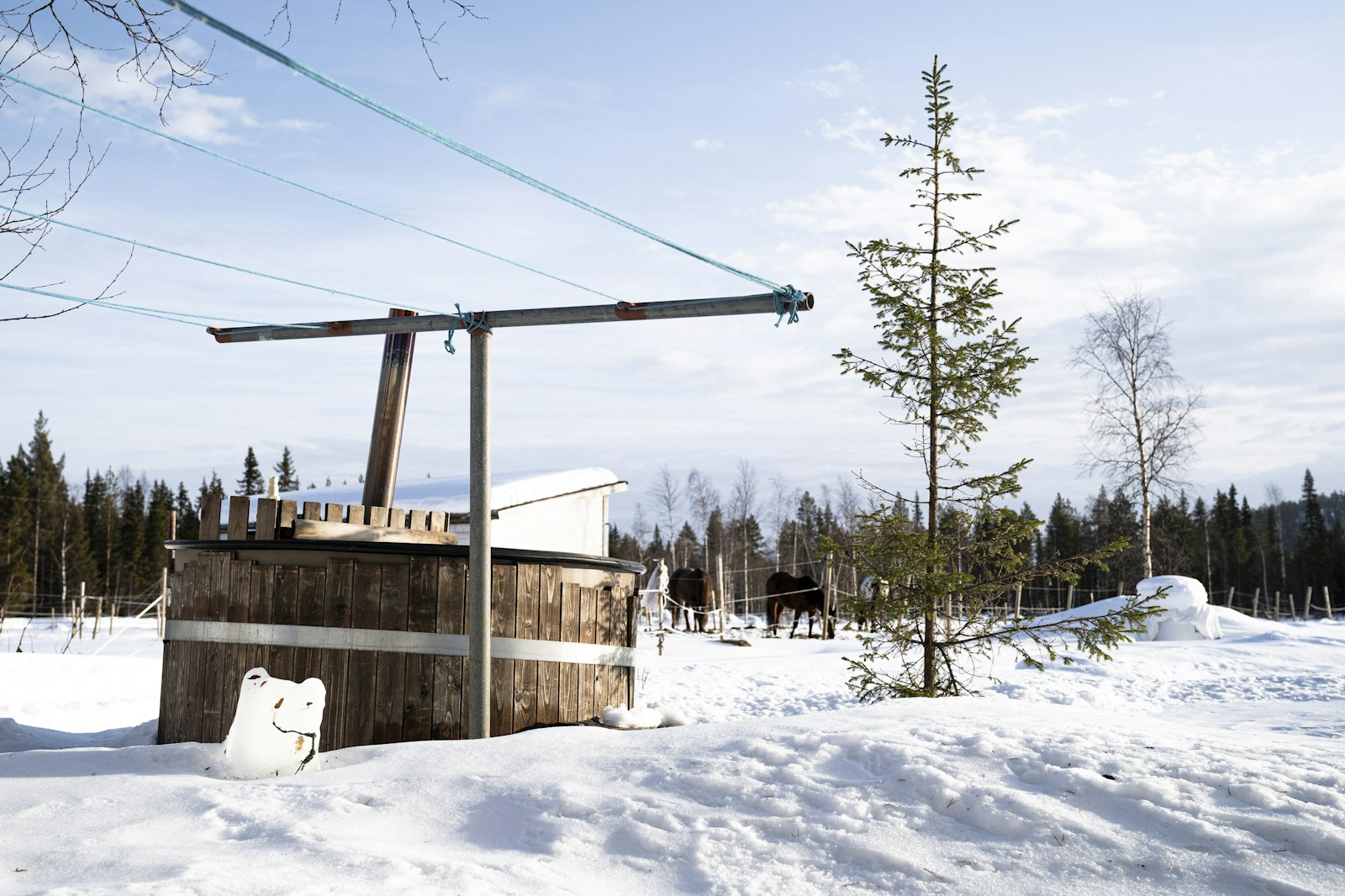
Green hot tub water comes from one of two things, and they need opposite fixes. If the water is clear but tinted green and the walls feel smooth, it's almost always dissolved metal, usually copper. If it's cloudy green and the walls feel slimy, it's algae. Algae gets a shock and a good clean. Metal gets a metal sequestrant and a pH check, and another shock can make it greener. So before you add anything, run your hand along the wall and test the water.
Most hot tubs hold about 400 gallons, and that's the size every dose here is worked out for. For any tub, the targets are pH 7.4–7.8, alkalinity 50–80 ppm, and chlorine 3–5 ppm or bromine 4–6 ppm.
Why is my hot tub water greenish?
Clean, balanced hot tub water is clear, with a faint blue look to it. When it goes green, something in it is giving it color.
Algae is the one most people think of first. It's a living thing, and warm water with too little chlorine or bromine is exactly where it grows. It usually gets in on something: a swimsuit that was in a lake, leaves blowing in, a tub left uncovered while the sanitizer burned off.
Metal is the one people miss. Copper, iron and manganese can all tint water, and copper is the usual green. It can come in with your fill water, from city or well. It can come from inside the tub, when water that's low in pH or calcium slowly eats at metal parts like the heater. And it can come from copper-based algaecides. Dissolved copper is colorless at first. Add chlorine or bromine, which are oxidizers, and the copper turns into the green you're looking at.
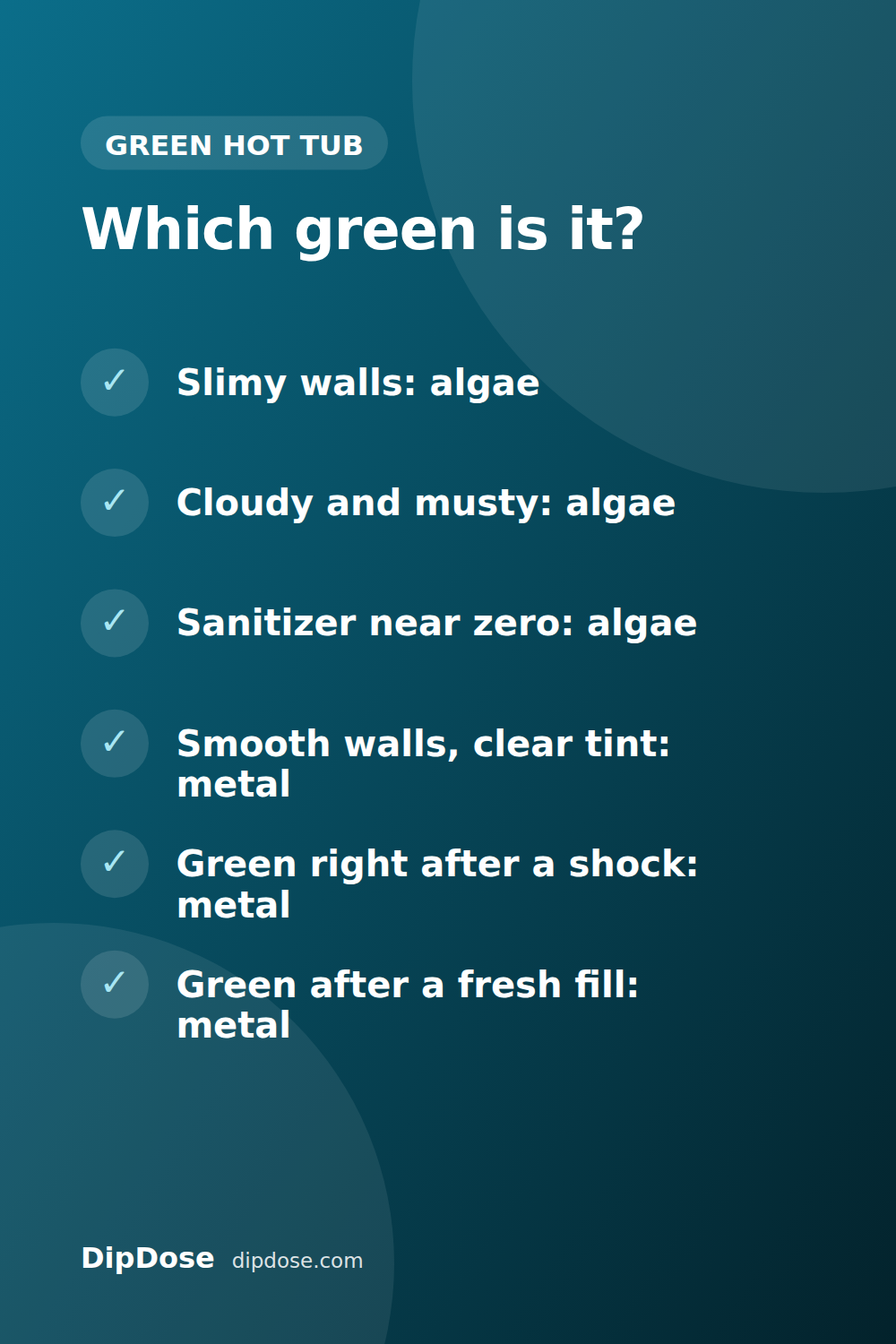
| What you notice | Algae | Metal (usually copper) |
|---|---|---|
| The wall | Slimy or slippery | Smooth |
| The water | Cloudy, murky green | Clear, with a green or teal tint |
| The smell | Musty | Nothing unusual |
| Your test strip | Chlorine or bromine low or zero | Sanitizer can read fine |
| When it showed up | After days of low sanitizer | Right after a shock or a refill |
| The fix | Balance, shock, scrub, clean the filter | Sequestrant, fix pH, rinse the filter |
Hot tub water green but clear: it's usually metal
This is the one that catches people out, because the obvious move makes it worse. If you can see the seats and the floor clearly, the walls feel smooth, and there's no musty smell, you're very likely looking at oxidized copper.
Don't reach for the shock. More oxidizer just turns more of the copper green. Here's what to do instead:
- Test pH and alkalinity first. Low pH is what lets water eat at the heater, so if pH reads under 7.4, raise it. For a 400-gallon tub at 80 ppm alkalinity, DipDose's dose to take pH from 7.0 to 7.6 is about 38 grams (1.3 oz) of soda ash, added in two halves.
- Add a metal sequestrant (sold as "metal control" or "stain and scale"), at the amount on its label. It grabs the dissolved metal so it doesn't stain the shell or tint the water.
- Let it circulate, with the jets running for as long as the bottle asks.
- Then rinse or clean the filter, which is where a lot of what the sequestrant caught ends up.
- Keep sanitizer in range, but skip the extra shocks until the tint is gone.
If it still won't clear, or the tint keeps coming back, the copper is probably arriving with every top-up. Test your tap water for metals, or just plan for it: a hose pre-filter on the next refill takes a lot of it out before it reaches the tub.
Acid and chlorine, never together
If pH is high instead and you need dry acid, put on gloves and eye protection and add one chemical at a time with the jets running. Always add acid to water, never water to acid. Wait at least 30 minutes between acid and chlorine — never mix them.
Hot tub water green and cloudy: that's algae
Slimy walls, murky water and a musty smell mean algae, and your test strip will usually show chlorine or bromine near zero. The sanitizer ran out and something grew in the gap.
You've got two ways out. The quickest, in a tub this small, is honestly to drain it, clean it and refill. If the water's already three months old or more, that's the move. A tub wants a full drain, clean and refill every three to four months anyway, and the hot tub guide for beginners walks through it.
If the water's fairly fresh, you can kill the algae instead. Balance first, because chlorine works far better at the right pH. Then shock with chlorine, scrub, and clean the filter.
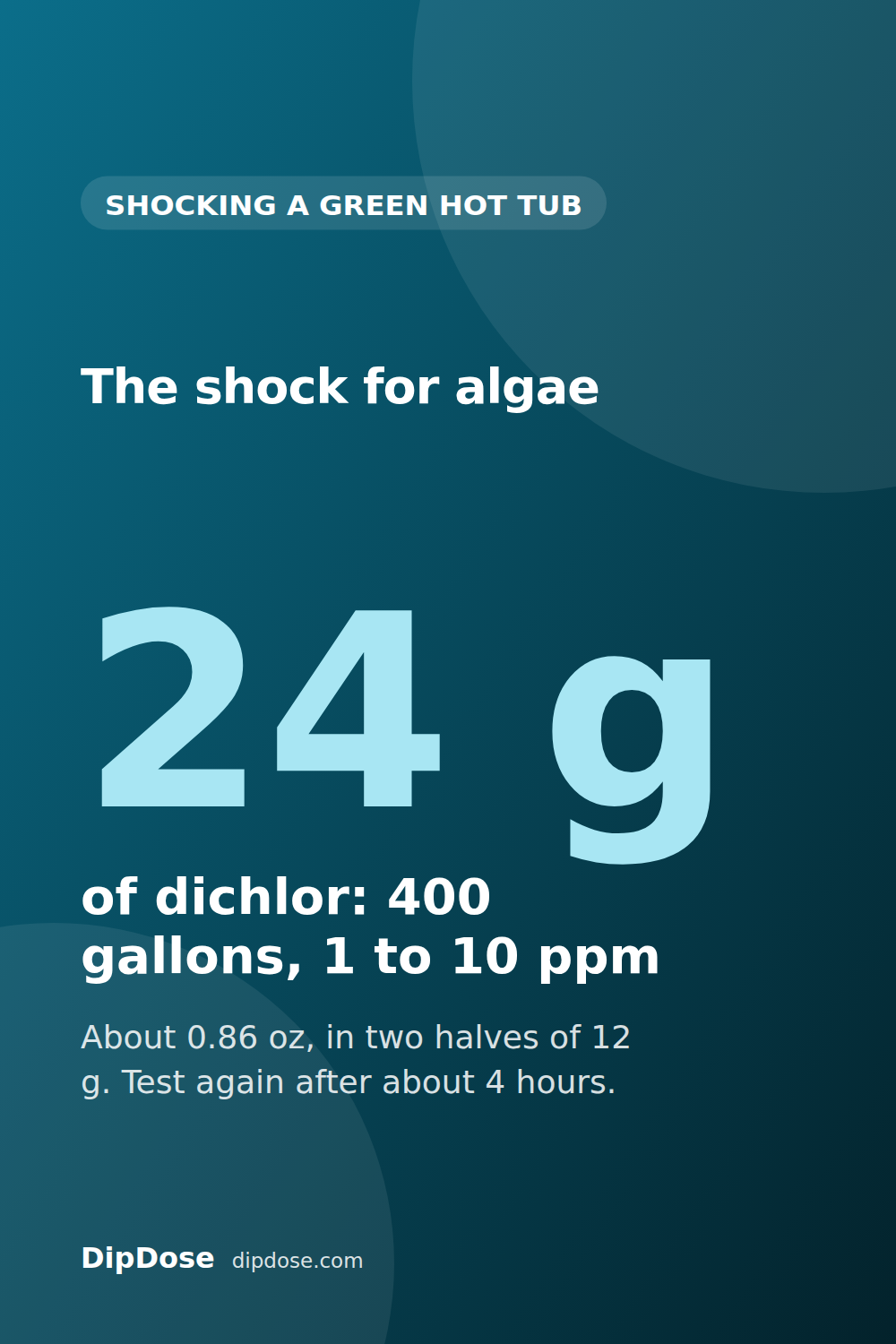
A hot tub shocks at 10 ppm of chlorine. With dichlor, the chlorine granules most hot tub owners have, that's about 24 grams (0.86 oz) for 400 gallons, starting from 1 ppm, or about 18 grams for a 300-gallon tub and 30 grams for 500. With 8.25% household bleach it's about 158 mL (5.3 fl oz) for the same 400 gallons. Either way, add half first (about 12 grams of dichlor or 79 mL of bleach) with the jets on and the cover off, test again after about 4 hours, and add the other half if chlorine is still short of 10.
While it works, brush the walls, the seats and the footwell, and scrub the waterline. Pull the filter and clean it, or swap in a spare. A filter full of algae keeps feeding the problem straight back into the water. Wipe the underside of the cover too, since algae can grow in the condensation up there.
If it's still green the next day
Test again. If chlorine has dropped back under 3 ppm, the algae used it up, so bring it back to 10. Here's the catch with dichlor, though. Every 1-to-10 shock in 400 gallons also adds about 8 ppm of stabilizer (cyanuric acid), and DipDose keeps a chlorine tub at 30 ppm of stabilizer or less. Three or four rounds and you've hit that ceiling. The more stabilizer there is, the weaker the same chlorine gets.
So if a second shock doesn't do it, switch to bleach for the next one, since it adds no stabilizer. Or call it and drain. Draining after a slime problem works best with a pipe cleaner (a "purge" product) run through the jets first, because a tub has a lot of hidden plumbing where the slime hangs on.
Will shocking a hot tub get rid of green water?
Only if it's algae. A chlorine shock kills algae, and that's the right first move when your strip shows sanitizer near zero and the walls feel slimy.
Two things trip people up. Algae needs chlorine raised to the shock level and kept there until the water clears, so one small top-up rarely does it. And if the green is copper, a shock does the opposite of what you want, because it's the oxidizer that turned the copper green in the first place.
Got a bromine tub? A chlorine shock still works. In a bromine tub, chlorine turns the spent bromide already in the water back into working bromine, which is why DipDose names a chlorine product when it raises bromine.
Green after a shock or a fresh fill
This is the classic metal story. You fill the tub, the water looks fine, you add your first dose of chlorine or shock, and a few hours later it's green. Nothing grew that fast. The fill water brought dissolved metal in, and the oxidizer turned it green.
The fix is the same as for clear green water: sequestrant at the label's amount, pH into 7.4–7.8, jets on, then a filter rinse. On the next refill, put the sequestrant in before the first shock, so the metal is already tied up when the chlorine arrives.
A fresh fill also needs balancing before anything else. Test first, then fix alkalinity to 50–80 ppm, then pH. If your alkalinity reads 40, about 64 grams (2.2 oz) of baking soda takes 400 gallons up to 65 ppm. Add calcium only if your water is soft, since water that's too low in calcium eats at heaters too.
Is it safe to go in a hot tub with green water?
No, not until it's clear and your sanitizer tests in range. If it's algae, green means the chlorine or bromine wasn't keeping up, and whatever let the algae grow could let germs grow too. If it's metal, the water may not be dirty, but you can't tell which one you've got just by looking, and a fresh shock needs its wait anyway.
Wait until you can see the seats and the floor clearly and the strip reads chlorine 3–5 ppm or bromine 4–6 ppm. After any chemical, follow the wait on its label before you get in. Product strengths differ from brand to brand, so when a label gives a different amount or wait, the label wins.
How to keep it from turning green again
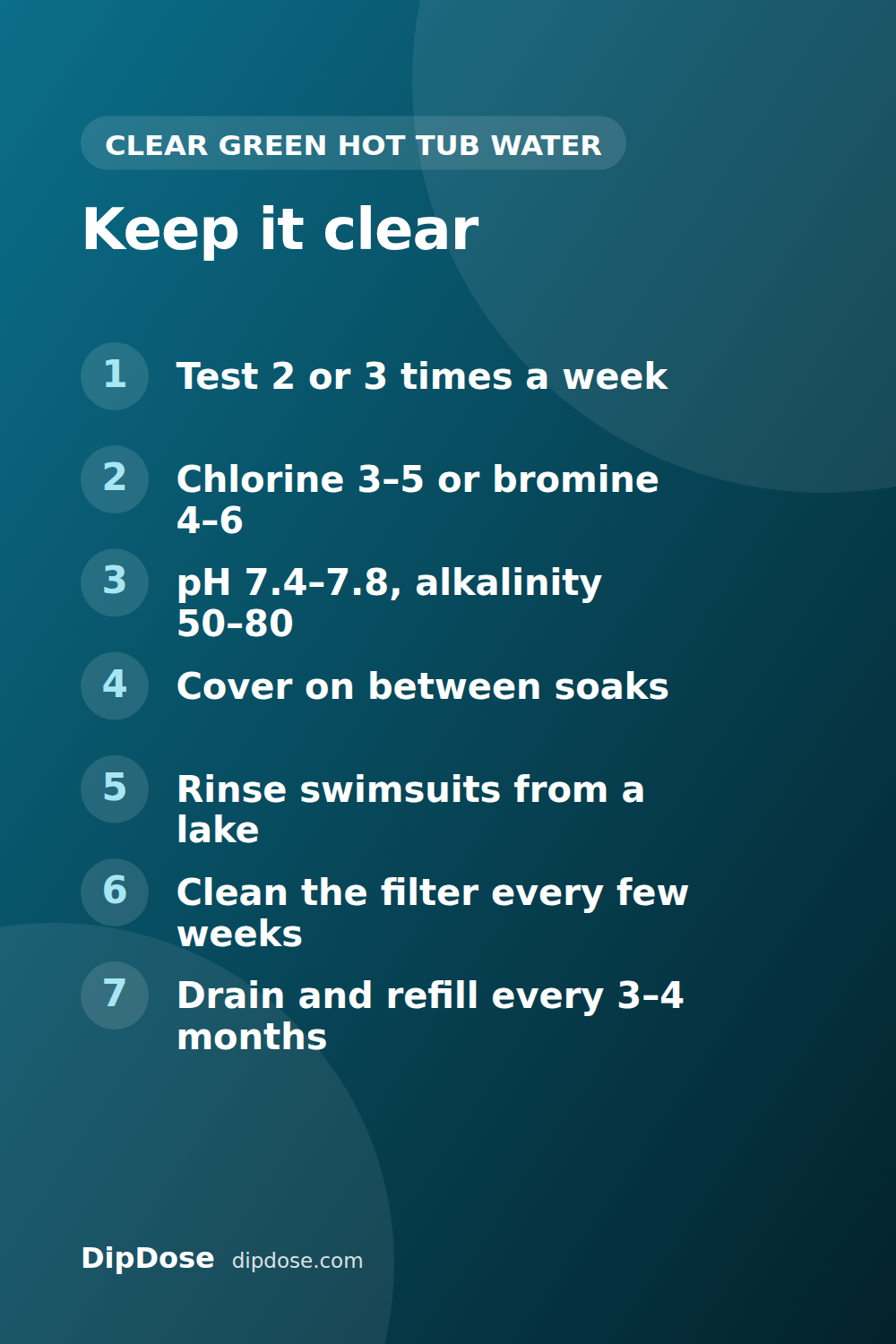
Algae only takes hold when sanitizer runs low, so the boring routine is the whole defense. Test two or three times a week and top up each time. Rinse the filter every few weeks, since that's where the gunk collects. Keep the cover on when you're not using the tub. A swimsuit that's been in a lake or a pond gets a good rinse, or better, a tub-only suit.
For metal, keep pH and calcium in range so the water isn't chewing on the heater. DipDose's range for calcium in a hot tub is 100–250 ppm. If your fill water carries copper or iron, a hose pre-filter on every refill and a sequestrant before the first shock stop it at the door.
And if it ever goes green again, start with the wall. Slimy or smooth tells you more than the color does. If you want the doses done for your tub's real gallons, the hot tub calculator works them out from your strip, and the cloudy hot tub guide covers the haze that sometimes follows.
Questions people ask
How do I get rid of green water in my hot tub?
Feel the wall and test first. Slimy walls and low sanitizer mean algae: balance alkalinity and pH, shock with chlorine to 10 ppm, scrub, and clean the filter, or drain and refill. Smooth walls and clear green water mean metal: add a metal sequestrant at the label's amount, bring pH to 7.4–7.8, and rinse the filter.
Why is my hot tub water green even though I added chlorine?
Two common reasons. If it's algae, a small top-up doesn't do it: chlorine has to reach the shock level of 10 ppm and stay there until the water clears, and chlorine works poorly when pH is off or stabilizer has built up. If it's dissolved copper, the chlorine is what turned it green, so more chlorine makes it worse and a metal sequestrant is the fix.
Will shocking a hot tub get rid of green water?
Only if the green is algae. A chlorine shock to 10 ppm, held until the water clears, kills algae. If the green is copper, a shock can make it greener, because the oxidizer is what turns dissolved copper green.
Why is my hot tub water greenish?
Either algae, which grows when chlorine or bromine runs low, or dissolved metal, usually copper from fill water, corroded parts or copper algaecides, turned green by chlorine or bromine.
Sources
- Hot tub chemical calculator: ranges and doses (DipDose)
- Hot tub chemicals for beginners: the routine and the 3–4 month refill (DipDose, read 2026-11-10)
- Green pool: how to clear algae (DipDose, read 2026-11-10)
- Why do hot tubs go green? (Master Spas, read 2026-11-10)
- Green hot tub water: algae, oxidized copper and plumbing build-up (FROG, read 2026-11-10)
- How to fix green water in your hot tub (Swim University, read 2026-11-10)
- How to fix green hot tub water: sequestering before shocking (onehottub, read 2026-11-10)
Keep reading
Hot Tub Cloudy After Adding Chemicals? What the Last One You Added Tells You
Hot tub cloudy after adding chemicals? The last one you added points to the cause: pH up, baking soda, shock, calcium or a refill. What to test and fix.
Can You Mix Bromine and Chlorine in a Hot Tub? Shock Yes, Switching No
Can you mix bromine and chlorine in a hot tub? A chlorine shock is fine in a bromine tub; dry products never mix. The dose for 400 gallons, and how to switch.